

Wellness Tips & Bodywork Education


Our Blog

At Dosha Bodywork & Wellness LLC, we want to show you that true wellness encompasses the mind, body, and spirit.

Make a Request: 


If you have something specific you would like more information on, or specifically for your care.  

Please let us know at doshabodyworkwellness@gmail.com


Service Preview

Deep tissue and lymphatic drainage in one session

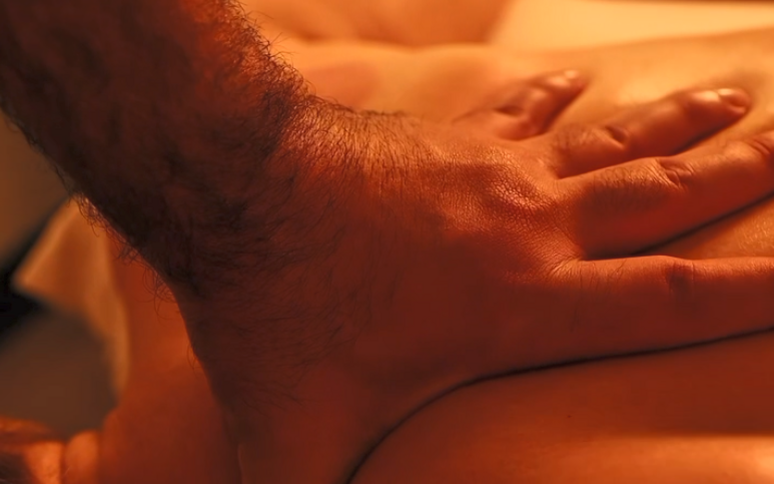
A look at a real session that blends deep tissue, gentle lymphatic drainage, and focused myofascial work. You'll see why lymphatic work stays light and close to the skin, how slow, focused pressure reaches the neck, traps, low back, and hips, and a couple of breathing and posture habits you can use between visits.


One rule for any work you try at home: pressure should feel therapeutic, never sharp. If something feels wrong, stop.


Where to Next:

New here

Everything you need for your first visit, from booking to what to wear.
Regular care

Memberships and packages for bodies that do better with rhythm.

For businesses

On-site chair and table massage for teams across the Triangle.


Does a massage have to hurt to work?

Anthony LaValle, LMBT · NC License #19260


If it doesn't hurt, it's not working. A lot of people walk in believing that, and it's an easy belief to land on. Somewhere along the way you probably had a massage that felt nice and changed nothing, then one that made you grit your teeth and finally reached the knot. So your brain filed it away: pain equals progress.


Here's the short answer. A massage doesn't have to hurt to work, and past a certain point, pain gets in the way. Intensity is fine. Bracing isn't.


Why "it hurts so good" isn't the whole story

Anthony LaValle, LMBT · NC License #19260


There's a real difference between intense and painful. Intense is that deep, achy pressure on a spot that's been tight for months, where you can still breathe slowly and the muscle seems to soften toward it. Painful is when you hold your breath, grip the face cradle, curl your toes, or tighten the muscle next door to protect the one being worked.


That second reaction is called guarding. It's your body's way of protecting itself, and it's very good at its job. The problem is that a guarded muscle is tightening on purpose, which is the opposite of what we're trying to help it do. So pressure that makes you brace doesn't get further in. It just makes the work harder for everyone, including the muscle.


What the research says about pressure

Anthony LaValle, LMBT · NC License #19260


Researchers at the University of Miami's Touch Research Institute have spent years comparing different pressure levels. In one small randomized study, healthy adults who received moderate pressure massage shifted toward the rest side of the nervous system, with heart rhythm changes linked to calm. The group that got light pressure did the opposite and showed signs of arousal. A later review from the same team found moderate pressure linked to lower anxiety and heart rate.


Notice the word moderate. Not maximal. The goal is pressure your body can accept, not pressure it has to survive. (And no, that doesn't mean feather light is the answer either. Slow doesn't mean soft.)


What our clients tell us

Anthony LaValle, LMBT · NC License #19260


Clients who come in braced for a fight usually leave describing something different. One client who'd had close to a hundred massages before her first visit with us wrote that Anthony went straight to her problem areas, and she walked out with no soreness and no tension. Another, who has a sports medicine background, noticed how the work followed the way her muscle groups connect instead of hammering one spot.


And one of Michael's clients wrote that her hand pain went from a 7 to a 4 in a single 75 minute session, with Michael following the tension up into her chest and hips. None of them described the work as painful. They described it as precise.


How to tell if the pressure is right

Anthony LaValle, LMBT · NC License #19260


  • You can breathe slowly and evenly the whole time
  • The muscle softens under the pressure instead of pushing back
  • It feels like a deep, useful ache, not something sharp or electric
  • Your jaw, hands, and feet stay loose
  • You can say "more" or "less" and nobody's offended

If any of those slip, say something. Changing the pressure halfway through a session isn't rude. It's the most useful thing you can tell your therapist, because nobody can feel what you feel.


How deep pressure works at Dosha

Anthony LaValle, LMBT · NC License #19260


Deep tissue here is a target, not a pressure level. Before you arrive, you tell us your pressure preference and focus areas, so nothing on the table is a surprise. The tissue gets warmed first, the work goes deeper only where your body allows it, and your therapist checks in along the way.


If you've ever been told you're too sensitive for real work, you probably weren't. You were handed a routine that didn't fit your body. (And if you've ever left a massage feeling like you lost a fight, this whole post was written for you.)


It can feel intense, especially on a spot that's been tight for a long time. It shouldn't feel sharp, make you hold your breath, or make you brace. If it does, the pressure is ahead of what your body can use right now.

Yes, every time. Your therapist can't feel what you feel, and adjusting pressure mid session is a normal part of good work, not a complaint.

It depends on the goal. Some work, like lymphatic drainage, is light on purpose. For tight muscles, research points to moderate pressure as the sweet spot, which is firm enough to reach the tissue without setting off your body's alarm system.


Sources

Diego MA, Field T. Moderate pressure massage elicits a parasympathetic nervous system response. International Journal of Neuroscience, 2009.

Field T. Massage therapy research review. Complementary Therapies in Clinical Practice, 2014.


What you're actually paying for when you book a 90 minute massage?

Anthony LaValle, LMBT · NC License #19260


It's easy to look at a massage price and do the math in your head: that much, for someone to rub my back for an hour and a half. Fair enough. If that's all a session was, the math would be hard to argue with.


But that isn't what a professional session is. You're not paying for hands on your back. You're paying for training, judgment, and care built around your body on that specific day.


It starts before anyone touches you

The work doesn't begin when you lie down. It begins with understanding why you're here. Before your session, we talk it through: what's bothering you and for how long, any injury or recent surgery, anything medical that changes how we should work today, and where your body feels restricted.


Sometimes that conversation changes everything. A recent surgery means certain areas wait. A pregnancy changes your positioning. A pain pattern that's been around for months tells us where to look first. That's not small talk. It's how the session stays safe and actually does something.


The minutes that look like nothing are working

During a session, your therapist might reposition you, check how a joint moves, add stretching, or pause to notice how your body is responding before going further. From the table, that can feel like a break in the action. It isn't. Those are intentional parts of the work, and they're often where the real decisions get made.


What's underneath it?

Behind every session is the part you never see: the schooling, the continuing education, the years of practice, and the judgment that comes from working on thousands of bodies. Anthony has twelve years of it, and Alycia and Michael each bring their own training. A skilled therapist understands anatomy, how muscles and nerves behave, and how to change the plan halfway through when your body says something different than expected.


That's what you're paying for. The hands are just how it gets delivered.


Appointment time versus table time

Here's where honesty matters. There's a real difference between a 90 minute appointment and 90 minutes of hands-on massage. Some practices count the conversation, the setup, and the aftercare inside your 90 minutes. That can be fine, as long as you're told before you book.


Every practice should be upfront about which one they're selling. At Dosha, a 90 minute session is 90 minutes of hands-on work. The conversation before and the aftercare after happen on top of it, never taken out of it. (So yes, plan your parking meter accordingly.)


Quality over the clock

None of this is about counting minutes for the sake of it. The goal was never to run a routine so someone can say their hands were on you for a set amount of time. The goal is thoughtful work, built around what you came in with, that keeps you safe and actually helps. The minutes are honest. What happens in them is the point.


Ninety minutes on the table, with the conversation and aftercare on top. See what that feels like.


It depends on the practice, so ask before you book. At Dosha, the conversation before your session and the aftercare after it happen on top of your 90 minutes of hands-on work.

You're paying for your therapist's training, experience, and judgment, plus a session built around your body instead of a set routine. Ask any practice what's included in the time you're booking, and compare the whole picture.

The 90 minute session is $220 at our standard rate and $205 for members, with gratuity and complimentary enhancements included.


Dosha provides licensed, therapeutic, non-sexual massage. Any sexual request or behavior ends the session immediately, the full session is charged, and you won't be able to book with us again.

Hours of Operation

BY APPOINTMENT ONLY


Saturday: 8am-9pm

Sunday: 8am-9pm

Monday: 8am-7pm
Tuesday: 8am-6pm
Wednesday: 8am-6pm
Thursday: 7am-6pm
Friday: 8am-9pm

Address

101 Oakview Commons Drive Building 107 Suite 123

Holly Springs, NC, NC 27540

© 2026 Dosha Bodywork & Wellness LLC. All rights reserved